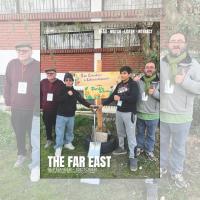
Children from Warmi Huasi in Lima, Peru. Photo: Fr Ed O'Connell SSC
Pope Leo XIV, otherwise known as Robert Prevost, was ordained in 1982 as a member of the Augustinian order. In Peru, the Augustinians have traditionally overseen the Prelature of Chulucanas.
He arrived in Peru in 1985, presumably to serve in Chulucanas, but instead, spent ten years in Trujillo, a city some distance away. There, he worked as a parish priest and taught in the regional seminary, likely at the request of the Archbishop of Trujillo, who was probably short of professors at the time.
I myself served as curate and parish priest in Peru during two periods: from 1973 to 1985, and again from 1999 to 2019. All of that time was spent in the pueblos jóvenes, the townships, on the north side of Lima, where poverty is widespread. In these densely populated areas, you are constantly in direct contact with the people, especially women, children, and the elderly, who form the core of the Church community. Adult men tend to participate less regularly, mostly attending traditional events such as patronal feasts, baptisms, first communions, wakes, funerals, and anniversary Masses.
The Peruvian people are incredibly warm and welcoming towards their priests. You are regularly invited to meals, to family celebrations, as well as communal festivities like Mother’s Day, Christmas and the national holidays in July. The sacramental work is intense: a typical parish might see between 300 and 500 baptisms each year, along with around 300 first communions, 150 confirmations, 50 weddings, and many wakes and funerals. Of course, there are also many tragedies to support the people through, too.
In Peru, a parish priest is also seen as a local authority figure. Since the Catholic Church is the official Church, like the role of the Anglican Church in the UK, there is a public dimension to the priesthood. You must learn to balance your responsibility to speak up for the needs of ordinary people, who often face abuse or neglect from local authorities, while trying to build respectful relationships with and encourage those in power to act for the common good.
 Photo: ©Vatican Media – All rights reserved
In November 2014, Fr Robert Prevost moved to Chiclayo to serve as Apostolic Administrator of the Diocese and was consecrated as a bishop in December of that year. As is customary, foreign priests must first be naturalised before being appointed bishops, which had happened in his case back in 1985.
In his final two years in Peru, Bishop Prevost also administered the troubled Diocese of Callao, again acting as a trusted problem-solver. By then, he had also become Vice President of the Peruvian Bishops’ Conference. Later, in 2023, Francis called him to Rome to take charge of appointing bishops, a role that brought him even closer to the Pope.
The people of Chiclayo are delighted that this man who was their bishop is now their pope. Pope Francis had appointed him to Chiclayo to bring stability after the retirement of the previous bishop, who was from Opus Dei. As Pope Leo himself said recently, it was the people who formed him as a bishop, through their affection, affirmation, and kindness.
Leo was my personal choice for Pope from the beginning, though I hardly dared dream that the Holy Spirit and the cardinals would come to the same conclusion. He represents continuity with Francis but also offers the possibility of greater unity.
Many bishops and cardinals did not fully grasp Francis’ mindset, not having shared his pastoral experiences.
Francis’ language wasn’t always accessible to everyone. I believe Leo will be better able to communicate with a broader spectrum of Church leaders and help build greater unity. Of course, there will always be some who are not open to listening, but he will do his best to reach across divides.
Columban Fr Ed O’Connell lives and works in Britain.
Listen to "Pope Leo XIV’s Peruvian roots"
Related links
- Read more from The Far East - September/October 2025