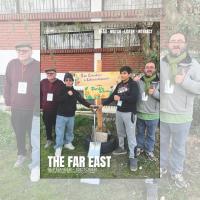
Living Soils Farm, at Sitio Kakawan, Patrocenio, Claveria, Misamis Oriental, conducted training on Regenerative Agriculture/Soil Regeneration over two days on February 22–23, 2025. The training was attended by no less than ten key leaders of organisations from different parts of Mindanao.
These key leaders, farmers, and faith-based organisations have been engaged in various initiatives to protect and care for the environment through agroecological, climate-resilient farming practices.
The training objective was to find new inspiration to rekindle and renew the interest of these key leaders, who have been working, practising, and promoting natural, organic agriculture in rural areas; obtain the latest updates on the Philippine agricultural situation as well as updates on organic agroecological and soil regeneration practices; and reflect on and deepen understanding of the roles and functions of soil microorganisms in sustaining agriculture and its strategies for application and wider adoption in communities.
The participants were amazed by the training. It was held in a venue where they could directly see the living proof of what it preached: healthy plants grown with the use of naturally produced indigenous microorganisms. Different plants, such as corn, peanuts, tomatoes, string beans, sweet potato, and many more, grow strong and healthy at Living Soils Farm with the application of tailor-made, science-based compost and bio-solutions. Farmers witness the soil transformation process for better yield and healthier plants. This method has been developed and enhanced by the Living Soils Farm led by engineer Gerry Burdas, who recently studied the Soil Food Web System in California, USA.
The training navigated participants to current and updated soil tools and materials, from simple tools like tie-wires to determine the compaction of soils to sophisticated ones like microscopes. The “how-to” and “why” aspects of regenerating, revitalising, or healing the soil then followed. The current agricultural context and situation were discussed by Bobby M. Pagusara, former Coordinator of MASIPAG-Mindanao and Agroecology Consultant of the Swiss Catholic Lenten Fund (Fastenaktion) projects in the Philippines, which serves as the rationale for why this training is relevant and important.
The participants realised that it all boils down to the basic premise that God created everything good and perfect. The soil is perfect. It offers a complete and balanced ecosystem with beneficial and non-beneficial microbes, such as bacteria, fungi, and nematodes, that live on by eating harmful bacteria, fungi and nematodes, thereby neutralising or preventing bad microbes from causing sickness and diseases in plants.
As a result of this process, the wastes or excretes, which include minerals/nutrients eaten by bacteria and fungi, become the yummy food or available food nutrients for the plants - thus making plants grow very well. Billions of beneficial bacteria-protozoa, fungus-mycelium, and nematodes are found in soils not sprayed with synthetic agrochemical fertilizers and pesticides.
Each microbe or group of microbes must be connected to the other to perform this function or task. Different kinds of microbes and minerals should be together to produce the desired result, which is making minerals and nutrients available for plants and preventing bad microbes from harming or infecting the plants. This can happen only when they are together as a community. However, agrochemicals disrupt this mutual and symbiotic functioning process because all microbes, good and bad, are destroyed by synthetic chemical fertilizers and pesticides. So natural organic farming is the correct way to manage agriculture.
Good soil is indicated by having many clusters of microbial communities bonded together, as observed by participants through the microscope during training. When organisms are in communion, good things happen. This is also the challenge to human organisms, the homo sapiens. We need to group ourselves and unite as universal clusters of communities with the common purpose of restoring the soil and caring for the environment. We strive to do this in the best way possible following the most perfect model of communion: God the Father, God the Son, and God the Holy Spirit.
The participants were highly inspired and motivated to continue doing organic farming and/or regenerative agroecological methods to help mitigate climate change and care for the environment, the health and life of the people and the world. According to one of the participants, Greg Tacbas, who is a farmer leader and a local Church Lay Minister: For me, the training was the most reaffirming and extraordinary training I’ve ever attended in the sense that it reconfirmed and provided sufficient proof of my previously gained knowledge in the field of sustainable/organic/DIFS (Diversified and Integrated Farming System) agriculture. Because of this, I am so inspired to pursue and more motivated and aggressive towards agroecology. Thank you very much, Fr Oliver McCrossan and your friends, for organising/sponsoring/supporting this training, and to our scientist resource persons, Sir Gerry Burdas and Bobby Pagusara, for coordinating and organising this training.
Columban Fr Oliver McCrossan lives in Ireland.
Related links
- Read more from The Far East - June 2025