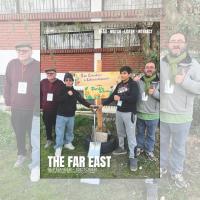
Mother Earth's gift of water. Photos: Fr Alvaro Martinez SSC
Mirrihue Alto is a rural town five kilometres from the village of Antuco in the Bio-Bio region of southern Chile. Some of its inhabitants work in honey and honey-derived products.
One of the major challenges facing the area is the lack of native trees and wild flora, primarily caused by the proliferation of large monoculture plantations, such as pine and eucalyptus. Trees like eucalyptus can consume between 20 litres of water a day for a three-year-old tree and up to 200 litres for a 20-year-old tree, which damages the ecosystem and renders these hectares highly vulnerable to forest fires. Furthermore, pine trees cause significant harm to the soil and, consequently, to the ecosystems of other wildlife.
Water scarcity is one reason it’s difficult to maintain and support native trees and wild flora, leading to the need for deep wells for irrigation. These wells help create floral diversity. Additionally, monoculture directly harms the lives of bees, pollination, honey production, and its byproducts, affecting the area’s wildlife.
That’s why, years ago, when I first discovered the area, I began dreaming of digging a deep well that would enable the planting of native trees for the direct benefit of the local ecosystem. It has been a long and complex journey because the soil is very rocky, and the water is deep, which makes well construction quite expensive. After years of waiting and searching, a satellite survey revealed that the land where I wanted to dig was unsuitable. This result, although discouraging, didn't deter me from dreaming and continuing my search.

A few months ago, a small company informed me they could drill the well, so we resumed the hunt for a suitable location. The hunt was carried out using an ancient technique of the local Mapuche people: they once used wooden rods but now employ pieces of copper wire. This method of searching for the “eye of water" or the location of deep water, is called zahorí. With this technique, we identified the perfect spot to dig and create the well that would provide the water.
I must admit that the amount of investment involved scared me, but with the help of a few friends, I was able to meet the expenses, inspired by the confidence of the man in charge of the project, who assured me that the water was 11 metres deep. His calm voice encouraged me to take the risk, even though I hadn’t first said a prayer or sprinkled holy water, nor brought a medal of Saint Pius or the Virgin Mary to the chosen spot. The initial metres of digging were challenging and filled with rocks. While we were digging and only encountering rock, a local man - digging a well is a community effort where all the neighbours help - asked me if I had sought Mother Earth’s permission to dig for and draw water.
This question lingered in my mind, and early the next day, I returned to the site to pray. I sprinkled holy water and sought Mother Earth’s permission to continue digging for water. The ground began to give way, and soon, water gushed from the depths of the earth at nine metres. By 13 metres, a steady flow was ensured for the trees to be planted this winter in southern Chile. These native trees will be donated by those who have learned of our wish to contribute to biodiversity.
This experience teaches me to continue searching even when the “studies” are unfavourable; it encourages me to trust the dream that drives my search. It reveals the wisdom of “asking permission”, which implies recognizing our interconnectedness rather than seeing ourselves as owners of Mother Earth (Ñuke Mapu in the language of the Mapuche people). It reminds me to trust what others share (small business, the man with the copper rods, the neighbour who came to accompany me) and urges me to delve deeper, motivating me to remove the obstacles through arduous work, but one that enables an encounter with life: water!
Columban Fr Alvaro Martinez is on sabbatical in his home country of Chile before taking up his new assignment in the United States in August.
Listen to "Mirrihue Alto"
Related links
- Read more from The Far East - July 2025