Columban Fr Trevor Trotter and Chief Executive Officer (CEO) Maha Shawky. - Photo: St Columbans Mission Society
On the fourth Sunday of October, we celebrate World Mission Day within the broader context of Mission Month, held annually each October. In his message for World Mission Day 2023, Pope Francis chose a theme inspired by the story of the disciples on the way to Emmaus, “Hearts on fire, feet on the move” (Luke 24:13–35). When the Pope writes in his message that “One cannot truly encounter the risen Jesus without being set on fire with enthusiasm to tell everyone about him”, and commends “those persons who have come to know the risen Christ in the Scriptures and in the Eucharist, who carry his fire in their heart and his light in their gaze”, he could be describing the Missionary Society of St Columban, which goes out across the globe in the name of the Church to announce the Good News of Jesus Christ.
The Missionary Society of St Columban, also known as the Columbans, was founded by two young Irish priests, Fathers Edwin Galvin and John Blowick, in 1918. Its name was inspired by St Columban, a great Irish missionary who worked on the European continent in the sixth century. Rather than being a congregation, it is a Society of Apostolic Life, made up of missionary priests, lay missionaries and lay people, called “co-workers”. Currently, there are 289 Columban priests, 26 lay missionaries, 27 students and many co-workers working in 15 countries around the world – namely, Australia, New Zealand, Fiji, Chile, Peru, the United States, the Philippines, Myanmar, Pakistan, China, South Korea, Japan, Taiwan, Ireland and Great Britain.
Columbans are known for basing themselves in places where the Gospel has not been preached and for standing in solidarity with the poor. They consistently fundraise to help those living in poor conditions and develop and manage schools, hospitals and clinics in areas of need.
Fr Trevor Trotter is based at the Columban Mission Centre in Essendon, in the north of Melbourne. A Columban priest since 1970, he explains that the Columbans initially travelled to China and soon moved to the Philippines, Myanmar and Korea at the invitation of various bishops. Their role was to build up the kingdom of God wherever they went but also, in those early years, to supply priests to churches in need. “Different people would hear about us and so when they needed help, or if they needed priests, they’d reach out to the Columbans,” he says.
Fr Trevor explains that Columban priests are more akin to diocesan priests than to those who join a religious order. They don’t take vows of poverty, chastity and obedience, though they do take oaths, which they follow. Being established this way allows Columban priests the freedom to serve on their own, often in very remote and rural parishes and ministries - which has often been the case where there’s been a shortage of priests.
“When you’re appointed to a diocese in a country that doesn’t have enough priests, you might have one priest in one location, and then it’s a long trip to the next parish. If you’re in Myanmar, for instance, you have to climb mountains often to get somewhere, so it can be difficult to gather. And so these secular societies of priests who go out into the world were established, in order to serve where needed.” There are currently Columban priests and lay missionaries on mission in the Myitkyina diocese, Myanmar. The education centres and boarding schools for the local population are supported by the Columbans. The boarding schools are necessary because the students need to travel far and climb mountains to attend. The Columbans also support and work in the rehabilitation centre due to the impact of drugs on the local population.
 Currently, there are 289 Columban priests, 26 lay missionaries, 27 students and many co-workers working in 15 countries around the world – namely, Australia, New Zealand, Fiji, Chile, Peru, the United States, the Philippines, Myanmar, Pakistan, China, South Korea, Japan, Taiwan, Ireland and Great Britain. - Photo: St Columbans Mission Society
“It’s right up on the Chinese border, so a lot of drugs come across,” says Fr Trevor. “The people suffer because they’ve been persecuted. They are working in the highlands and the government, of course, is in the lowlands. And so the government is always trying to push these highland people off. As a result, the Kachin rebel army is growing and the people are caught in the middle, so they have a terrible life, and drugs are a way to cope.”
The Columbans have also established many disability centres, with Columban priests and lay missionaries supporting those in Korea, Peru, Taiwan and China. St Elizabeth’s Hospital in Pakistan is supported by Australian Columban Fr Robert McCulloch, migrant centres in Taiwan, Chile and Britain are managed by Columban priests and lay missionaries. Fr Trevor says these are just some examples, but there are many videos on their website, in a section called “Meet a Columban”, that showcase the many ways in which Columbans are on mission across the globe.
Within Australia, the Columbans have established a number of offices that speak to their missionary work here. In Blacktown, there is the Columban Centre for Christian–Muslim Relations, which has been building mutual understanding between Christians and Muslims since 1997. Fr Trevor explains that the Columbans started the centre in response to seeing the many conflicts around the world between Christians and Muslims and recognising that as Australia is a neighbour to one of the largest Muslim populations in the world - Indonesia - this would be an important dialogue to foster and share. Columban Fr Patrick McInerney currently heads this centre, which Fr Trevor describes as “a major part of the Church’s mission”.
Based on their commitment to solidarity with the poor and care and respect for all of creation, another important area of work for the Columbans is “peace, ecology and justice”. Their work has been inspired by Pope Francis’ encyclical Laudato si’ and his more recent apostolic exhortation, Laudate Deum. Maha Shawky is a co-worker and Chief Executive Officer of the Columban Mission Centre in Essendon. She explains that as part of their peace, ecology and justice (PEJ) missionary work, they engage with schools across Oceania, along with parishes. She says, “Each year we run a competition for schools based on a theme in the Season of Creation (September 1 - October 4), which helps to engage students with issues around climate and care for creation. We also run workshops and programs in Australia through our Regional Director, Fr Peter O’Neill, and Sr Caroline Vaitkunas RSM, who run our PEJ office.” Every quarter, supporters of the Columbans can stay up to date with quarterly newsletters, which boast a subscriber list of 18,000 people.
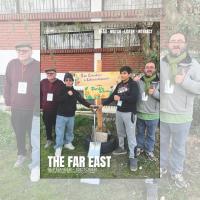
“Our supporters are so important,” says Maha. “Fundraising is an important part of our missionary work. Through our Columbans in Australia, New Zealand and Fiji, we raise money to support the work we do in those poorer countries such as the Philippines, Pakistan, Chile, Myanmar and Peru.” To help spread awareness of their missionary work and their causes, Columban priests often share their stories in local parishes and help to raise funds from donations and through sales of The Far East magazine and the annual Columban Art Calendar.
“This is the great thing about having these guys working on the ground in all these places,” says Fr Trevor. “These priests come home and share with their local parishes real stories about what they’ve been doing overseas. So they tell their people in Ballarat what they’re doing in Peru, and how the people are living in Chile, Pakistan, Myanmar and the Philippines, and it builds awareness and helps raise funds. But it also provides communications and linkages across these distant places, which helps build that connection of the Church. After all, it’s not just the Columban mission; it’s God’s mission and a mission for all of us."
“When we share what is going on overseas, it is a way of helping the local people have some sense of the global Church - the global mission. We are part of a whole deal, with the whole Church being on mission.”
Fiona Basile is a writer and photographer working for Melbourne Catholic, the news platform of the Catholic Archdiocese of Melbourne
Listen to "Promoting human flourishing: On Mission with the Columbans"
Related links
- Read more from The Far East - January/February 2024