 Care for our oceans is not peripheral to our faith, but rather a Gospel responsibility! (PC: Pixabay)
As the world observes World Oceans Day 2026, the United Nations invites us to gather this year under the theme: “Reimagine: Beyond the world we know, a new relationship with our ocean.” To “reimagine” our relationship with the ocean, our faith calls us to deepen our sense of ecological conversion. Where we move past viewing the ocean as an endless resource to be exploited, and to step back into a worldview of kinship, reverence and stewardship of the ocean. As such, our faith compels us to view the environmental degradation as a moral crisis. Where Pope Francis reminds us that “everything is connected” through Laudato Si’; he was meaning that when we wound creation, which includes creation, we wound ourselves.
For us here in the Region of Oceania, the ocean is what connects us, it is the body of water that which our ancestors navigated to form new life, where we were sustained and shapes our histories and holds sacred narratives. It is reflected in our very name: Oceania. Pacific scholar Epeli Hau‘ofa describes this as a “sea of islands”, a vision that moves beyond scattered small islands or people, to recognise a fluid and thriving network of maritime communities, united by ancestry, and our relationship with the waitui, moana; the ocean.[1]
In 2026, there is a 95 percent likelihood of El Niño conditions emerging and bringing warmer ocean temperatures and drier weather patterns across parts of the Pacific region.[2] While this might be deemed as a naturally climatic occurrence, it has been exacerbated by our human actions and neglect. It comes at the expense of human greed and consumerism, which pollutes more than it protects. Our earths lungs, the ocean, is choked by the countless tonnes of human waste and plastic production thrown out. Without proper waste management systems, our oceanic home is in danger, and it is often the vulnerable communities in the Pacific that suffer the most.
But there is hope. On January 17th of this year, the groundbreaking BBNJ (Biodiversity Beyond National Jurisdiction) Treaty officially entered into force as international law. Long championed by Pacific leaders and faith-based advocates—including our own Columban JPIC networks - this 'High Seas Treaty' finally establishes a binding framework to protect the neglected two-thirds of our global ocean.[3] Through the formal NGO consultative status at the United Nations, the International Columban JPIC team has been a persistent faith-based voice.
 Columban Fr. Tony Cox who serves as the National Director of Stella Maris Australia, leads an apostolate of the sea that directly mirrors this call to care (PC: Columban Mission)
Our maritime connection is beautifully anchored in Catholic tradition through Our Lady, Star of the Sea (Stella Maris), the ancient patroness of seafarers who guides travellers through physical and spiritual tempests. Columban Fr. Tony Cox who serves as the National Director of Stella Maris Australia, leads an apostolate of the sea that directly mirrors this call to care. His ministry advocates for seafarers who can be the most isolated workers, ensuring that they receive pastoral care, support and friendship. This ministry reminds us that care for the ocean cannot be separated from care for those whose lives depend upon her. To protect the moana is also to stand in solidarity with those who live and work upon her oceans.
In the face of these realities, the church is responding or must respond being the prophetic voice against these injustices, to speak honestly about the ecological truths that impact us directly. To remind us that care for creation is not peripheral to our faith, but rather a Gospel responsibility. The moana that sustained our ancestors continues to sustain us today, it must be protected for future generations, so they too may traverse and safe-keep its waters for generations to come.
As we mark World Oceans Day 2026, to “reimagine” our relationship with the ocean, it is a call to ecological conversion as stewards of God’s creation.
Noa Mervyn Tuivunilagi, Justice Peace and Integrity of Creation (JPIC) Coordinator (Region of Oceania)
[1] Hau'Ofa, E. (2017). Our sea of islands. In Peoples of the Pacific (pp. 429-442). Routledge.
[2] 1News, “El Niño now 95% likely as NZ faces warmer, drier winter,” June 2, 2026.
[3] Agreement under the United Nations Convention on the Law of the Sea on the Conservation and Sustainable Use of Marine Biological Diversity of Areas Beyond National Jurisdiction (BBNJ Agreement), UN Doc. A/CONF.232/2023/4 (adopted June 19, 2023, entered into force January 17, 2026).
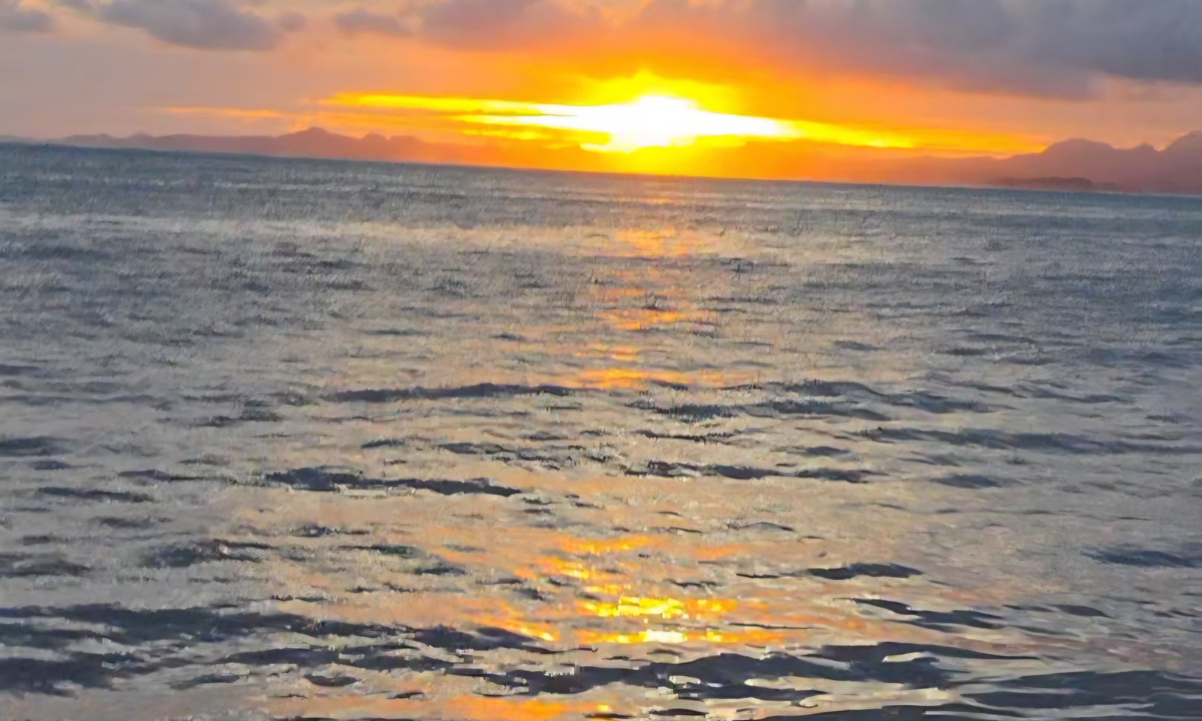 The foreshore of Nasese in Fiji’s capital city of Suva where the Columban missionaries live and work (PC: Columban Mission)